Do I Need a Permit for a Shed in Colleton County, SC?
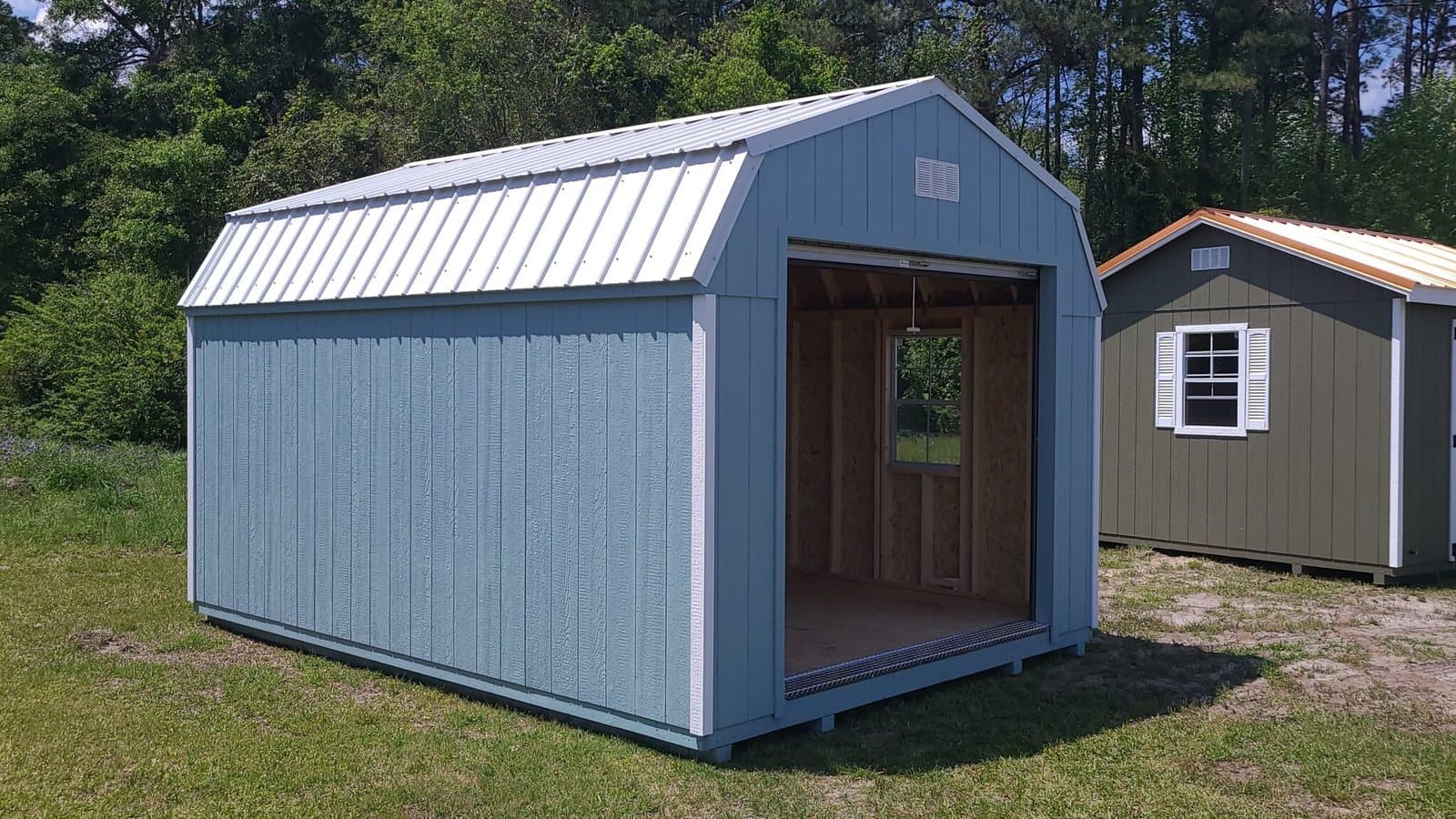
Short answer: in unincorporated Colleton County, a storage shed of 225 square feet or less does not need a building permit, but it does still need a zoning permit. Go over 225 square feet and you need both. Inside the Walterboro city limits the city handles it, and the setbacks are different. Here is how it actually works, what to bring, and how to pick a building that keeps the paperwork simple.
The 225 square foot line
Most articles about shed permits in South Carolina quote 200 square feet, because that is the number in the state residential code. Colleton County's own residential construction checklist draws the line at 225 square feet, so a 12×16 building at 192 square feet is under it and a 12×20 at 240 square feet is over it.
225 square feet or less. You fill out a Zoning Permit Application and a Restrictive Covenants and Non-Conversion Affidavit, and you bring two copies of a site plan showing the distance from the building to the front of the property and to the nearest dwelling. No building permit, no construction drawings, no inspections.
226 square feet or more. Everything above, plus a Building Permit Application and two sets of detailed plans for the building itself.
Common Wiggins Best sizes and where they land (see what is on the lot right now):
- 8×12 (96 sq ft), 10×12 (120), 10×16 (160), 12×16 (192): zoning permit only
- 10×24 (240), 12×20 (240), 12×24 (288), 14×28 and up: zoning permit plus building permit
Why you still need a zoning permit for a small shed
The county requires a zoning permit before any new building goes on a parcel, and its zoning office specifically lists sheds and barns as examples. The zoning permit is not about how the building is constructed. It confirms the building is going in an allowed spot on your lot. That is the part that trips people up, so it is worth knowing the rules before you pick a location.
Where the shed can sit on your lot
Colleton County's zoning ordinance has a table for accessory structures, and the row for sheds, dry storage buildings and greenhouses says:
- Side or rear yard only. A shed cannot go in the front yard on a normal residential lot. The exceptions are agricultural parcels of five acres or more in the RD-1 and RD-2 districts, and certain waterfront lots.
- At least 3 feet from the property line on the side and rear.
- At least 15 feet from every other structure, including your house, and from overhead power lines.
- On a corner lot, a shed in the rear yard cannot sit closer to the side street than the front setback for that street.
- It cannot sit on a dedicated easement, in a buffer yard, or in a required setback.
- It cannot be taller than your house.
One more rule that matters on a residential lot: campers, trailers and shipping containers do not count as sheds. Campers and trailers cannot be used for storage at all, and only one shipping container is allowed per lot. A proper portable building avoids that whole conversation.
Inside the Walterboro city limits
If your address is in the City of Walterboro rather than the county, the city's Planning & Development office issues the permit, and the city's setbacks apply. For the city's three residential districts the adopted numbers are:
- Single Family Residential (SFR): 35 ft front, 15 ft side, 10 ft rear, 25 ft corner side
- Medium Density Residential (MDR): 30 ft front, 12 ft side, 10 ft rear, 22 ft corner side
- High Density Residential (HDR): 25 ft front, 10 ft side, 10 ft rear, 20 ft corner side
Those are the principal-structure setbacks. Call the city before you finalize a spot, because the setback for an accessory building in your district may be handled differently, and it is a five-minute phone call.
What to have ready
For any size shed in the county:
- Your tax map (PIN) number. It is on your tax bill, or the Assessor's office can look it up.
- A recorded plat of the property. If there is none, the deed will do.
- A site plan. A scaled drawing showing the shed's footprint, its distance to the property lines, its distance to the house, and its distance to the front of the lot. The county accepts a printout from its GIS parcel map with the shed drawn on it.
- A posted 911 address on the property. The county will not process an application without one.
- The Zoning Permit Application and the Restrictive Covenants and Non-Conversion Affidavit.
If the building is over 225 square feet, add the Building Permit Application and two sets of plans. If the parcel is in a FEMA flood zone, expect a Floodplain Development Permit and an Elevation Certificate as well.
Electric, water, and plumbing
The size exemption covers a plain storage building. The moment you run power to it, wire outlets, or add a water line, the electrical or plumbing work needs its own permit and a licensed trade, regardless of the building's size. Plan for that if you want lights or a workshop circuit.
Restrictive covenants and HOAs
The county asks on every application whether your property has restrictive covenants. If you are in a subdivision with an HOA, the county permit does not override the HOA's rules. Get the HOA's written approval first. Most want to see the size, siding color and location, all of which you can pull straight from the Wiggins Best 3D builder.
How a portable building keeps this simple
A Wiggins Best building is delivered fully built on skids and set on blocks or a gravel pad. There is no site construction, no concrete inspection and no framing inspection. Under 225 square feet, the whole process is one zoning application and a site plan. Over 225, the county still needs a building permit, but the two sets of "detailed plans" it asks for are the building's construction drawings, not something you draft yourself. Ask us when you order and we will help you get what the county needs.
The practical advice from fifty years on the lot:
- If 192 square feet is enough, buy the 12×16. It is the largest common size that stays under the line, and it holds a riding mower, bikes and shelving with room to walk.
- If you need more, do not squeeze it. The building permit is a form and a set of drawings, not a construction project. Buy the size you will still be happy with in five years.
- Choose the spot before you order. Walk the yard with a tape. Three feet off the side and rear lines, fifteen feet off the house, out of the front yard, and clear of overhead power. Then measure the delivery path, because the truck and the building have to get there.
Contacts
Colleton County Planning & Development. 31 Klein Street, Harrelson Building, Room 300, Walterboro, SC 29488. Office (843) 549-1709, inspections (843) 549-1844. Monday through Friday, 8 AM to 5 PM.
City of Walterboro Planning & Development. Permit and zoning applications are on the city's website, or call city hall.
Wiggins Best. If you are not sure what size you need or where it will fit, call us at (843) 538-5269 or stop by 424 Sniders Highway. We can tell you whether a building lands under or over the line before you fill out a single form.
This article summarizes Colleton County's 2022 residential construction checklist, the county zoning ordinance, and the City of Walterboro's adopted setback schedule as of September 2026. Rules change and every lot is different, so confirm with the permitting office before you build.
- permits
- zoning
- colleton county
- walterboro
- sheds